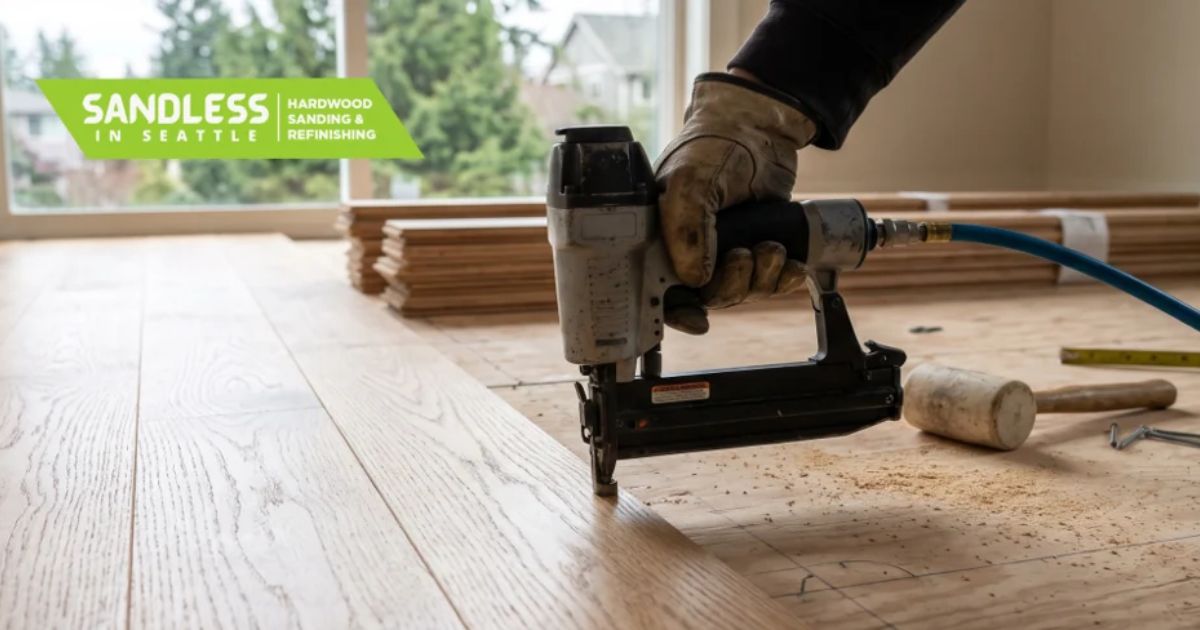
Natural wood brings timeless warmth, architectural character, and enduring value to residential interiors.
Across the Puget Sound region, where misty winters and distinct microclimates define daily life, installing hardwood floors requires more than standard carpentry. It demands an understanding of regional environmental dynamics, timber behavior, and structural subfloor mechanics.
For homeowners planning a renovation or custom build, partnering with seasoned wood floor installers Seattle WA ensures that every plank performs as beautifully as it looks, decades after installation.
The Puget Sound Climate Factor: Moisture and Wood Movement
Hardwood is hygroscopic; it naturally absorbs and releases atmospheric moisture as seasonal relative humidity shifts.
In western Washington, indoor environments often swing between cool, damp conditions in late autumn and dry, heated interiors in peak winter.
Without proper indoor climate management and meticulous site preparation, solid planks risk seasonal cupping, crowning, or structural buckling. Navigating these regional challenges starts with key installation protocols:
- Acclimation Windows: Raw or prefinished planks must acclimate within the home under active HVAC conditions until wood moisture content stabilizes relative to the subfloor.
- Subfloor Verification: Moisture vapor emissions from concrete slabs or crawlspaces require pinpoint measurement using calibrated pin-less moisture meters or calcium chloride tests.
- Vapor Retarders: Deploying professional-grade underlayments or elastomeric moisture barriers protects floor systems from below-grade humidity common in regional foundations.
Solid vs. Engineered Hardwood: Choosing the Right Foundation
Homeowners must balance visual preference with structural demands. Both solid timber and engineered flooring offer distinct advantages depending on room placement and home design.
| Flooring Attribute | Solid Hardwood Flooring | Engineered Hardwood Flooring |
| Composition | 100% single-piece natural lumber | Multi-ply cross-grain core with hardwood veneer |
| Dimensional Stability | Reacts noticeably to humidity swings | Highly stable against temperature & moisture changes |
| Refinishing Potential | Can be sanded and refinished 4 to 7 times | Typically refinished 1 to 3 times (wear-layer dependent) |
| Subfloor Compatibility | Plywood or OSB subfloors only | Plywood, OSB, and directly bonded over concrete |
| Ideal Regional Applications | Main living areas, historic home restorations | Condominiums, basements, homes with radiant heating |
Best Wood Species for Modern Pacific Northwest Aesthetics
Regional design trends blend modern craftsmanship with natural, biophilic materials. Several timber species remain perennial favorites:
- White Oak: Praised for tight grain structures and neutral undertones, white oak handles regional humidity fluctuations exceptionally well while taking gray, natural, and muted stains seamlessly.
- Douglas Fir: A traditional staple in historic craftsman homes throughout the region, Douglas fir delivers authentic vintage appeal, though its softer surface requires intentional maintenance.
- Hard Maple: Dense, smooth, and resistant to heavy foot traffic, maple complements minimalist and contemporary interiors, though it requires skilled craftsmanship to stain evenly.
- Hickory: Renowned for bold grain variations and superior Janka hardness ratings, hickory stands up effortlessly to active households, pets, and outdoor footwear.
The Technical Execution: Why Professional Craftsmanship Matters
A durable hardwood floor relies heavily on what remains unseen beneath the surface. From flattening uneven joists to calculating perimeter expansion gaps near baseboards, precision carpentry dictates long-term performance.
Qualified wood floor installers Seattle WA carefully select between blind-nailing, specialized adhesives, or full-trowel moisture-barrier glue systems based on the home’s subfloor construction.
Furthermore, working with NWFA-certified (National Wood Flooring Association) tradespeople guarantees adherence to national standards regarding fastener spacing, perimeter relief, and sand-and-finish dust containment.
A Lasting Foundation for Your Pacific Northwest Home
Ultimately, investing in premium hardwood flooring elevates both the daily living experience and the long-term equity of a property.
Navigating the unique climatic demands of the Pacific Northwest requires specialized expertise and a commitment to preserving the structural integrity and natural beauty of the timber.
For homeowners seeking innovative restoration and installation solutions, reliable industry leaders like Sandless in Seattle represent the standard of regional craftsmanship, ensuring every floor remains a resilient, stunning foundation for decades to come.
Frequently Asked Questions
How long does hardwood flooring need to acclimate in western Washington homes?
It typically takes three to seven days. However, installers must physically verify that the moisture content difference between the wood planks and the subfloor is within 2% to 4% before beginning the installation.
Is engineered hardwood or solid wood better for homes built on a concrete slab?
Engineered hardwood is highly recommended over concrete slabs. Its cross-ply construction actively resists the expansion caused by concrete moisture emissions, offering greater structural stability while looking identical to solid wood.
How should homeowners maintain wood floors during wet, rainy seasons?
Use high-quality entry mats to trap mud and grit. Implement a footwear-free rule indoors, keep pet claws trimmed, maintain indoor humidity between 35-55%, and exclusively use pH-neutral wood cleaners instead of damaging steam mops.
Read More Unique Guides
