
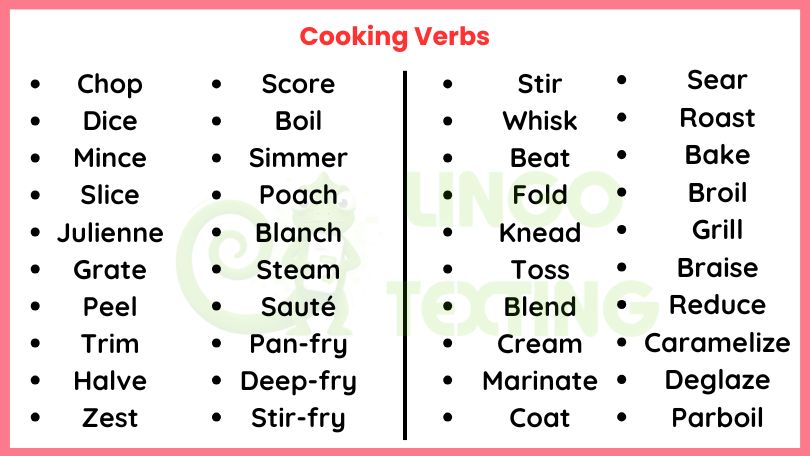
Cooking verbs are action words that describe exactly what to do with food — how to cut it, heat it, mix it, and finish it. Every recipe runs on these words, and misreading even one of them changes how a dish turns out.
Most cooking mistakes come not from wrong ingredients but from misunderstood instructions. There’s a real difference between simmering and boiling. Between chopping and mincing. Between folding and stirring. This guide covers all 45+ cooking verbs clearly, with meanings, examples, comparisons, and a practice section.
What Are Cooking Verbs?
Cooking verbs are the action words inside recipes. They tell you the physical thing to do with food at each step — not what to buy or serve, but exactly how to handle and cook it.
They fall into four groups:
- Cutting verbs — how to break food down
- Heat verbs — how to apply heat
- Mixing verbs — how to combine ingredients
- Finishing verbs — what to do before or after cooking
Cutting Cooking Verbs
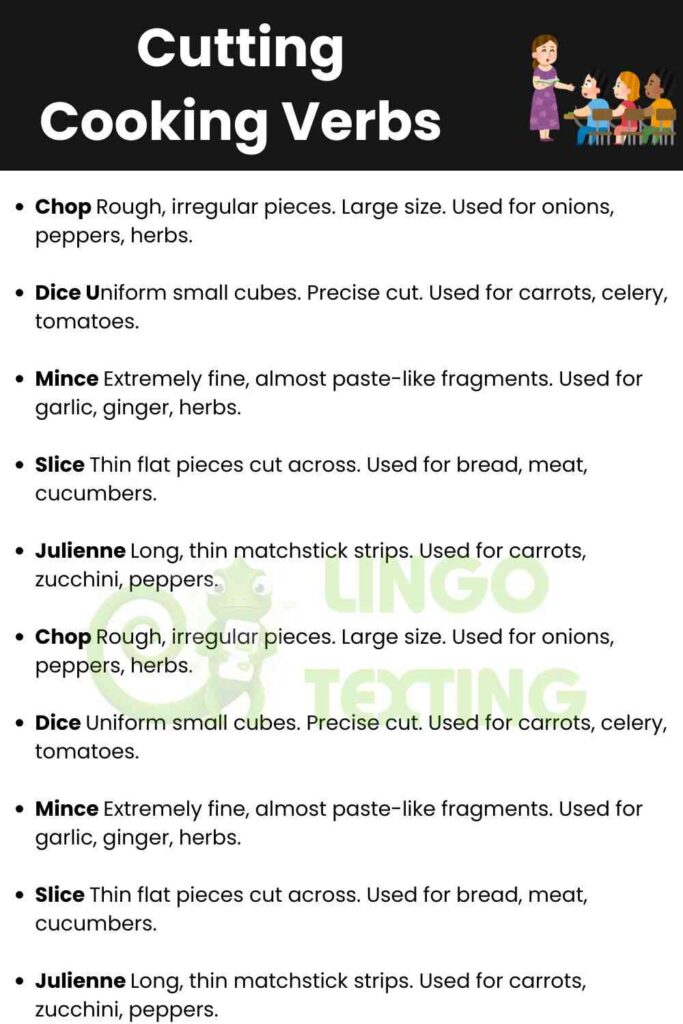
These verbs describe how food gets broken down. Cut size affects cooking time, texture, and flavor.
1. Chop Rough, irregular pieces. Large size. Used for onions, peppers, herbs.
2. Dice Uniform small cubes. Precise cut. Used for carrots, celery, tomatoes.
3. Mince Extremely fine, almost paste-like fragments. Used for garlic, ginger, herbs.
4. Slice Thin flat pieces cut across. Used for bread, meat, cucumbers.
5. Julienne Long, thin matchstick strips. Used for carrots, zucchini, peppers.
6. Grate Shred food against a grater. Fine or coarse result. Used for cheese, carrots, zucchini.
7. Peel Remove the outer skin. Used for apples, potatoes, citrus fruit.
8. Trim Remove unwanted parts like fat, stems, or tough edges. Used for meat, asparagus, green beans.
9. Halve Cut into two equal parts. Used for lemons, avocados, tomatoes.
10. Zest Scrape the colored outer skin of citrus. Used for lemons, oranges, limes.
11. Score Make shallow cuts on the surface without cutting through. Used for bread dough, fish skin, meat before marinating.
Heat Cooking Verbs
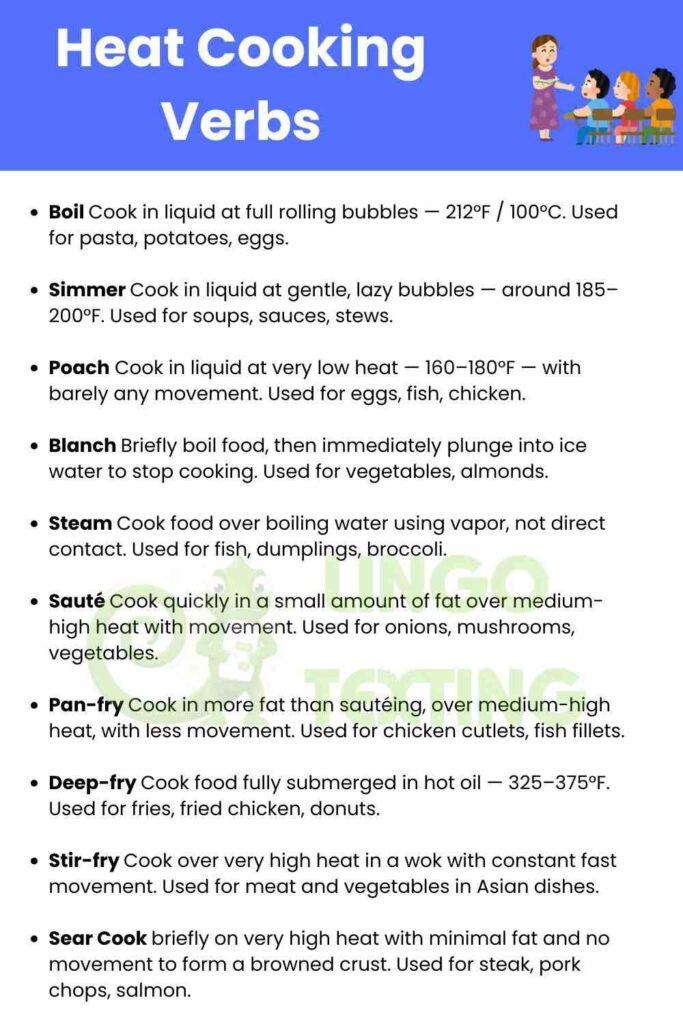
These are the most critical cooking verbs. Wrong heat level or method often ruins a dish completely.
12. Boil Cook in liquid at full rolling bubbles — 212°F / 100°C. Used for pasta, potatoes, eggs.
13. Simmer Cook in liquid at gentle, lazy bubbles — around 185–200°F. Used for soups, sauces, stews.
14. Poach Cook in liquid at very low heat — 160–180°F — with barely any movement. Used for eggs, fish, chicken.
15. Blanch Briefly boil food, then immediately plunge into ice water to stop cooking. Used for vegetables, almonds.
16. Steam Cook food over boiling water using vapor, not direct contact. Used for fish, dumplings, broccoli.
17. Sauté Cook quickly in a small amount of fat over medium-high heat with movement. Used for onions, mushrooms, vegetables.
18. Pan-fry Cook in more fat than sautéing, over medium-high heat, with less movement. Used for chicken cutlets, fish fillets.
19. Deep-fry Cook food fully submerged in hot oil — 325–375°F. Used for fries, fried chicken, donuts.
20. Stir-fry Cook over very high heat in a wok with constant fast movement. Used for meat and vegetables in Asian dishes.
21. Sear Cook briefly on very high heat with minimal fat and no movement to form a browned crust. Used for steak, pork chops, salmon.
22. Roast Cook uncovered in a dry oven with circulating air. Used for whole chicken, beef, vegetables.
23. Bake Cook in enclosed dry oven heat. Used for bread, cakes, casseroles.
24. Broil Cook under the oven’s top heating element at high direct heat. Used for steaks, fish, peppers.
25. Grill Cook over direct flame or hot coals. Used for steaks, corn, burgers, fish.
26. Braise Cook low and slow in a covered pot with a small amount of liquid. Used for beef short ribs, lamb, chicken thighs.
27. Reduce Heat liquid until it evaporates and concentrates in flavor and thickness. Used for stocks, wine sauces, pan juices.
28. Caramelize Heat food until natural sugars brown and deepen in flavor. Used for onions, apples, sugar.
29. Deglaze Add cold liquid to a hot pan to lift the browned bits stuck to the bottom. Used after searing meat.
30. Parboil Partially cook food in boiling water before finishing another way. Used for potatoes before roasting.
Mixing and Combining Cooking Verbs
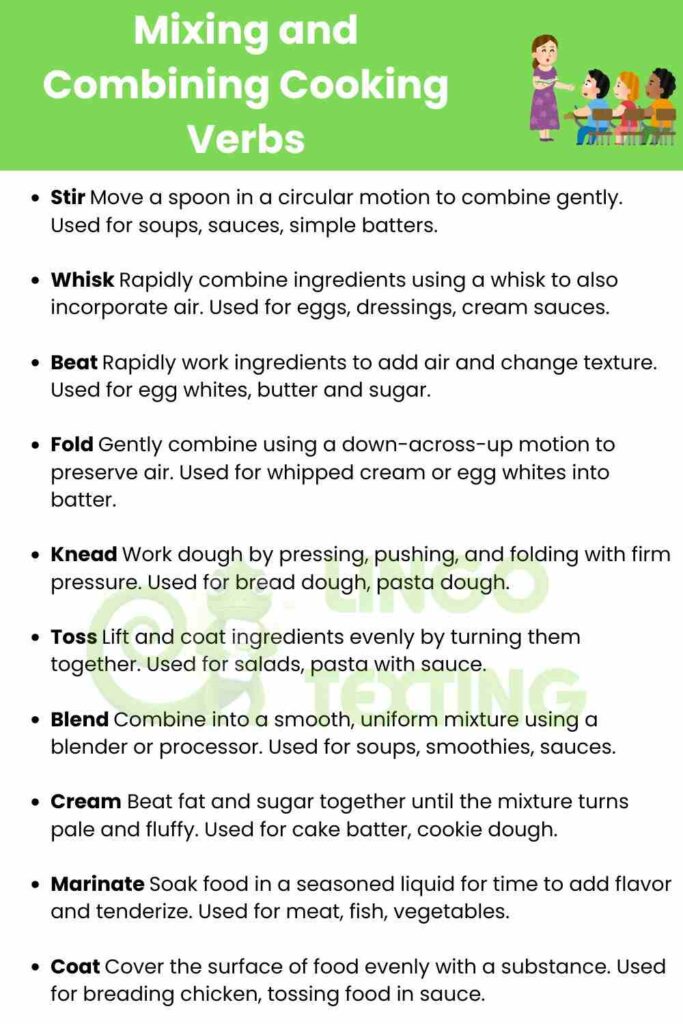
These verbs tell you how aggressively or gently to combine ingredients. In baking especially, the method matters as much as the ingredients.
31. Stir Move a spoon in a circular motion to combine gently. Used for soups, sauces, simple batters.
32. Whisk Rapidly combine ingredients using a whisk to also incorporate air. Used for eggs, dressings, cream sauces.
33. Beat Rapidly work ingredients to add air and change texture. Used for egg whites, butter and sugar.
34. Fold Gently combine using a down-across-up motion to preserve air. Used for whipped cream or egg whites into batter.
35. Knead Work dough by pressing, pushing, and folding with firm pressure. Used for bread dough, pasta dough.
36. Toss Lift and coat ingredients evenly by turning them together. Used for salads, pasta with sauce.
37. Blend Combine into a smooth, uniform mixture using a blender or processor. Used for soups, smoothies, sauces.
38. Cream Beat fat and sugar together until the mixture turns pale and fluffy. Used for cake batter, cookie dough.
39. Marinate Soak food in a seasoned liquid for time to add flavor and tenderize. Used for meat, fish, vegetables.
40. Coat Cover the surface of food evenly with a substance. Used for breading chicken, tossing food in sauce.
Finishing and Preparation Cooking Verbs
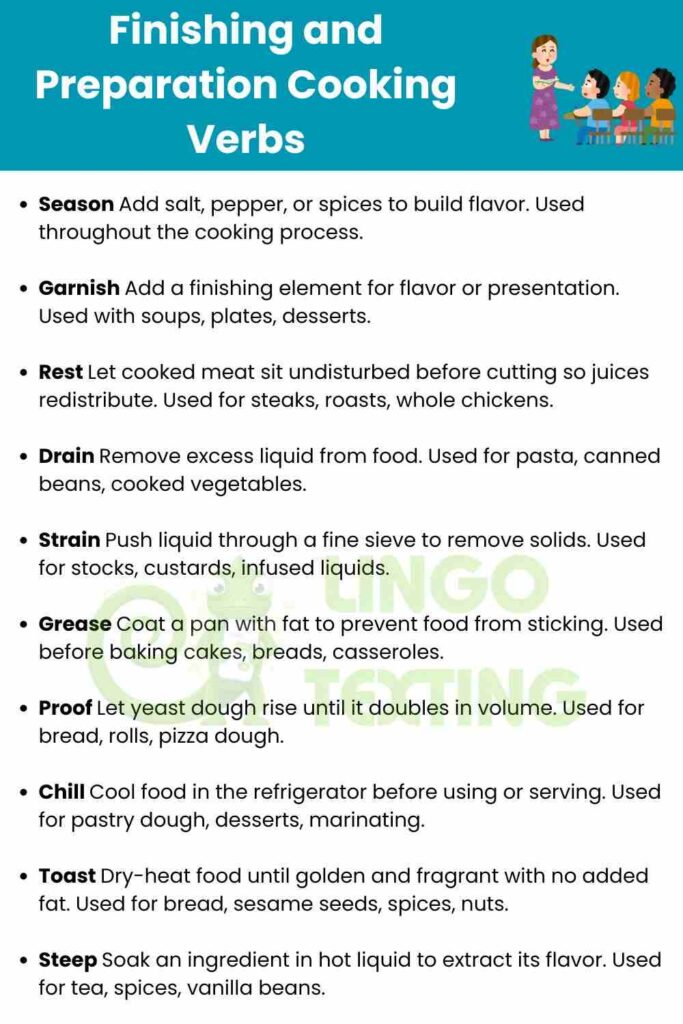
These happen either before cooking begins or right at the end before serving.
41. Season Add salt, pepper, or spices to build flavor. Used throughout the cooking process.
42. Garnish Add a finishing element for flavor or presentation. Used with soups, plates, desserts.
43. Rest Let cooked meat sit undisturbed before cutting so juices redistribute. Used for steaks, roasts, whole chickens.
44. Drain Remove excess liquid from food. Used for pasta, canned beans, cooked vegetables.
45. Strain Push liquid through a fine sieve to remove solids. Used for stocks, custards, infused liquids.
46. Grease Coat a pan with fat to prevent food from sticking. Used before baking cakes, breads, casseroles.
47. Proof Let yeast dough rise until it doubles in volume. Used for bread, rolls, pizza dough.
48. Chill Cool food in the refrigerator before using or serving. Used for pastry dough, desserts, marinating.
49. Toast Dry-heat food until golden and fragrant with no added fat. Used for bread, sesame seeds, spices, nuts.
50. Steep Soak an ingredient in hot liquid to extract its flavor. Used for tea, spices, vanilla beans.
Most Confused Cooking Verb Pairs — Side by Side
Cooking Verbs for Kids
Simple, safe verbs to start with:
- Stir — move a spoon in a bowl or pot
- Mix — combine ingredients together
- Pour — move liquid from one container to another
- Spread — cover a surface with butter or jam
- Wash — clean food before using it
- Peel — remove the skin from fruit or vegetables
- Crack — break an egg open
- Measure — use cups or spoons to get the right amount
Cooking Verbs in Real Sentences
- She minced the garlic until the pieces were almost invisible.
- The recipe said to simmer the sauce for 20 minutes, not boil it.
- He seared the steak on each side for 90 seconds over screaming-hot heat.
- Fold the whipped cream in gently so the batter stays light and airy.
- Blanch the green beans, then drop them into ice water immediately.
- Deglaze the pan with white wine to lift all the browned bits off the bottom.
- Proof the dough in a warm spot until it doubles in size.
- Reduce the stock over medium heat until it coats the back of a spoon.
- Knead the dough for eight minutes until it feels smooth and elastic.
- Rest the chicken for ten minutes before carving so the juices stay inside.
Quick Reference: All 50 Cooking Verbs
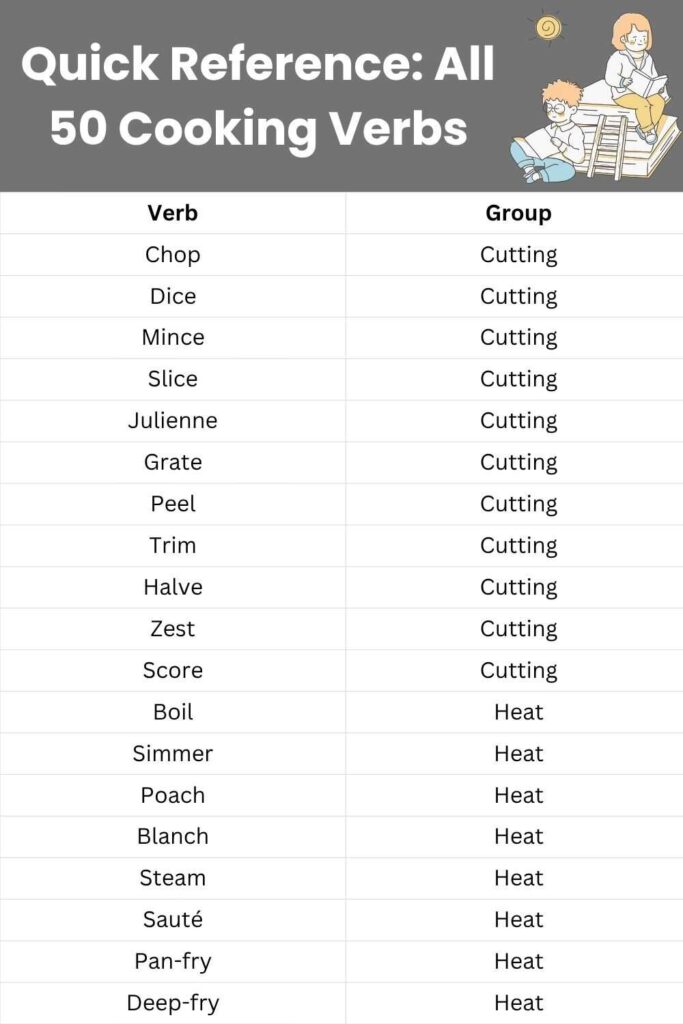
| Verb | Group |
| Chop | Cutting |
| Dice | Cutting |
| Mince | Cutting |
| Slice | Cutting |
| Julienne | Cutting |
| Grate | Cutting |
| Peel | Cutting |
| Trim | Cutting |
| Halve | Cutting |
| Zest | Cutting |
| Score | Cutting |
| Boil | Heat |
| Simmer | Heat |
| Poach | Heat |
| Blanch | Heat |
| Steam | Heat |
| Sauté | Heat |
| Pan-fry | Heat |
| Deep-fry | Heat |
| Stir-fry | Heat |
| Sear | Heat |
| Roast | Heat |
| Bake | Heat |
| Broil | Heat |
| Grill | Heat |
| Braise | Heat |
| Reduce | Heat |
| Caramelize | Heat |
| Deglaze | Heat |
| Parboil | Heat |
| Stir | Mixing |
| Whisk | Mixing |
| Beat | Mixing |
| Fold | Mixing |
| Knead | Mixing |
| Toss | Mixing |
| Blend | Mixing |
| Cream | Mixing |
| Marinate | Mixing |
| Coat | Mixing |
| Season | Finishing |
| Garnish | Finishing |
| Rest | Finishing |
| Drain | Finishing |
| Strain | Finishing |
| Grease | Finishing |
| Proof | Finishing |
| Chill | Finishing |
| Toast | Finishing |
| Steep | Finishing |
Mini Quiz about Cooking Verbs
- A recipe says “mince the garlic.” What size cut does that mean?
- A) Large rough chunks
- B) Small uniform cubes
- C) Tiny near-paste fragments Answer: C
- Which verb means cooking food in barely moving liquid at low heat?
- A) Boil
- B) Poach
- C) Deep-fry Answer: B
- When a recipe says “fold in the egg whites,” what should you do?
- A) Stir vigorously
- B) Whisk at high speed
- C) Gently lift and combine without deflating the air Answer: C
- What does “deglaze” mean?
- A) Remove glaze from baked ham
- B) Add liquid to a hot pan to lift browned bits
- C) Coat food in a glaze before baking Answer: B
Fill in the Blank
- _______ the onions in butter over medium heat until golden. (Sauté)
- _______ the bread dough for 8 minutes until smooth and elastic. (Knead)
- _______ the sauce to half its volume to concentrate the flavor. (Reduce)
- _______ the steak for 10 minutes before slicing. (Rest)
- _______ the lemon over the batter to add bright flavor. (Zest)
Read more –
250+ Daily Routine Words in English With Meanings, Examples, and Sentences
150+ Compound Sentence Examples: Guide for Real English Learners
FAQ’s about Cooking Verbs
What are cooking verbs and why are they important?
Cooking verbs are action words that tell you how to prepare, cook, or finish food. They are important because they give clear instructions in recipes and help ensure the dish turns out as intended.
Which cooking verbs should beginners learn first?
New cooks should start with common verbs such as chop, dice, boil, simmer, bake, roast, stir, mix, season, and drain. These appear in many everyday recipes and build a strong foundation for cooking.
What is the difference between chopping and dicing?
Chopping creates larger, less uniform pieces, while dicing means cutting food into small, evenly sized cubes. Dicing helps food cook more evenly and gives a neater appearance.
How can I remember different cooking verbs more easily?
Practice is the best teacher. As you cook, connect each verb with the action you perform. Reading recipes regularly and using the terms in real cooking situations helps them become familiar quickly.

I write clear, practical English lessons for everyday use. On Lingotexting, I break down grammar, vocabulary, and word types into simple ideas you can apply quickly. My focus is accuracy, real examples, and helpful visuals, so learners build confidence, improve writing, and communicate naturally in school, work, and daily life.