Most kids don’t struggle with English because it’s hard—they struggle because they don’t know what to say in real moments. That’s where English Sentences for Kids make a difference. Instead of memorizing rules, children need simple, ready-to-use lines they can speak at home, in school, or with friends.
This guide focuses on real-life speaking, not textbook learning. When kids practice small, useful sentences every day, they slowly build confidence. Over time, English stops feeling scary and starts feeling natural—just like their own voice.
What Are Daily English Sentences for Kids?
Daily English sentences are short phrases kids use in real situations — like saying good morning, asking for help, telling how they feel, or talking with friends. They are not grammar rules. They are speaking tools. When kids practice these small sentences every day, speaking English starts to feel natural instead of scary.
Why These Sentences Actually Matter
Think about a regular school day. A child needs to:
- Ask the teacher for permission
- Tell a friend they want to play
- Say they don’t understand something
- Ask for food at home
- Express when they feel sad or excited
All of these are real moments. And in every one of them, a child needs simple words ready in their mind. Short sentences for kids are not just for learning — they are for living daily life in English.
When kids know what to say, they stop feeling afraid to speak. That confidence grows every single day.
Morning Routine English Sentences for Kids
Every morning has the same moments — waking up, getting ready, eating breakfast, leaving for school. These English sentences used in daily life make those moments smoother.
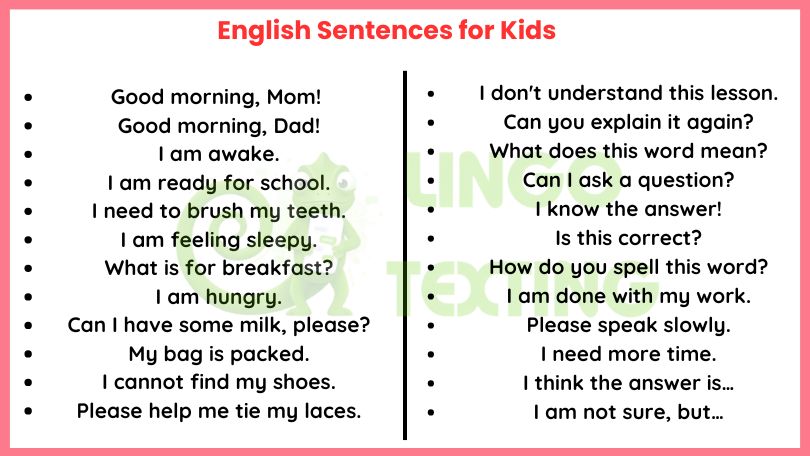
- Good morning, Mom! (A warm way to greet your parent)
- Good morning, Dad! (Start the day with a smile)
- I am awake. (Let everyone know you’re up)
- I am ready for school. (Said before you leave home)
- I need to brush my teeth. (A daily hygiene reminder)
- I am feeling sleepy. (When you’re still tired in the morning)
- What is for breakfast? (Asking about the morning meal)
- I am hungry. (When you need food before school)
- Can I have some milk, please? (Politely asking for a morning drink)
- My bag is packed. (Telling everyone you’re all set)
- I cannot find my shoes. (When something is missing before school)
- Please help me tie my laces. (Asking for small help while getting ready)
- Is the school bus here? (Checking before going out)
- I am getting late. (When you need to hurry)
- Bye, Mom! See you later. (Leaving the house)
- Have a good day! (Saying a warm goodbye)
- Where is my pencil box? (Looking for school supplies before leaving)
- I finished my homework last night. (Sharing good news in the morning)
- I feel good today. (Expressing a happy morning feeling)
- I need to eat quickly. (When time is short before school)
English Sentences for Kids for Class 1 and Beyond
These are daily use English sentences for Class 1 students and higher. You’ll hear these every single day in school. Practice them so they come out naturally.
Entering the Classroom:
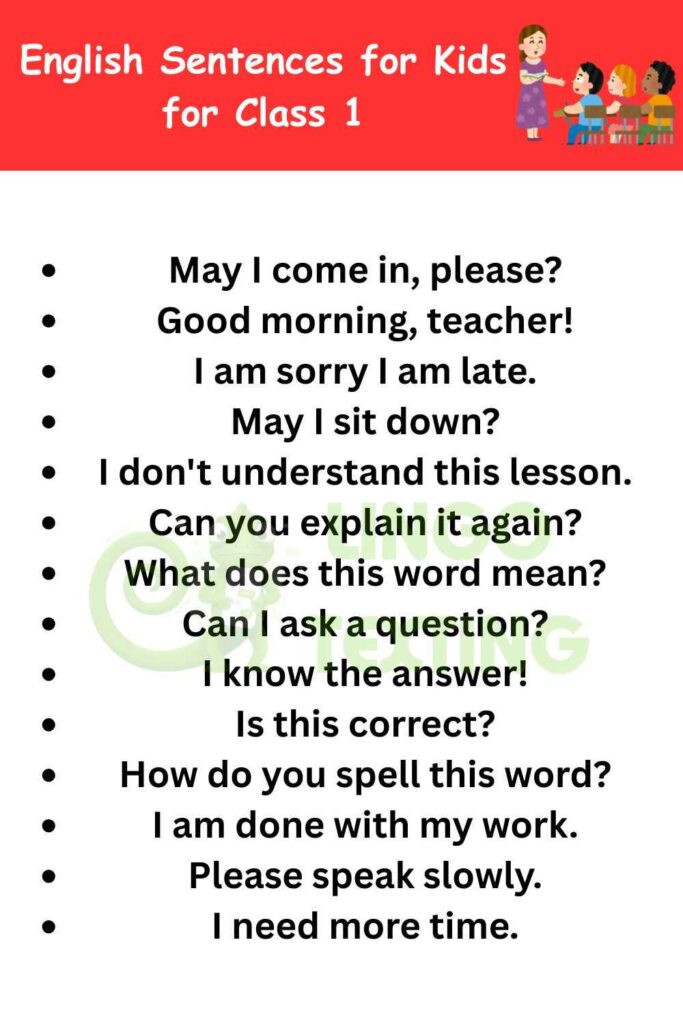
- May I come in, please? (Always ask before entering)
- Good morning, teacher! (A respectful greeting)
- I am sorry I am late. (When you arrive after time)
- May I sit down? (Asking permission politely)
During the Lesson:
- I don’t understand this lesson. (When something is confusing)
- Can you explain it again? (Asking for help with a topic)
- What does this word mean? (Learning new vocabulary)
- Can I ask a question? (Before speaking up in class)
- I know the answer! (When you’re confident)
- Is this correct? (Checking your work with the teacher)
- How do you spell this word? (Asking about spelling)
- I am done with my work. (When finished with classwork)
- Please speak slowly. (If you can’t keep up with the teacher)
- I need more time. (When you need extra minutes to finish)
Asking Permissions in Class:
- May I go to the washroom, please? (A must-know classroom sentence)
- Can I sharpen my pencil? (Simple daily classroom request)
- May I drink water? (Asking permission during class)
- Can I open the window? (When it’s hot inside the room)
- May I close the door? (A polite action request)
Expressing Yourself in Class:
- I think the answer is… (Sharing your idea with the class)
- I am not sure, but… (Speaking even when unsure)
- I disagree with that. (When you have a different thought)
- I agree with you. (When someone else is right)
- I made a mistake. (Owning up honestly)
- Let me try again. (Showing a growth mindset)
Asking for Help — Simple English Sentences Every Kid Needs
Kids ask for help all the time. But many don’t know the right words. These short sentences for kids make asking easy and polite.
- Can you help me, please? (The most useful sentence a child can say)
- I need help. (Direct and clear when you’re stuck)
- I don’t know how to do this. (Honest and completely okay to say)
- Will you show me how? (Asking someone to demonstrate)
- Can you do this with me? (Asking for company while working)
- I am confused. (Simple way to say you’re lost)
- Can you say that again? (When you didn’t hear properly)
- Please help me with my homework. (Asking a parent or sibling)
- Can you read this for me? (Asking for reading help)
- I don’t understand this question. (Being specific about your problem)
- Please show me one more time. (Asking for patience from someone)
- Can I ask you something? (Starting a help conversation)
- Is this the right way? (Checking if you’re on the right track)
- Who can help me with this? (Asking the group or class)
- I think I need some help here. (A softer way to ask for support)
English Sentences for Kids Daily Needs
These are real sentences kids say at home. Not for school, not for a test — just for getting through a comfortable day at home.
- I am thirsty. (When you need water at home)
- Can I have something to eat? (Asking for a snack between meals)
- I am full, thank you. (After finishing a meal)
- I want to sleep now. (When you’re tired after a long day)
- Can I watch TV for a while? (Asking for screen time)
- It is too cold in here. (Expressing temperature discomfort indoors)
- It is very hot today. (Talking about the weather outside)
- Can you turn on the fan? (Asking for comfort at home)
- I don’t feel well. (When something feels off physically)
- My head hurts. (Telling about a headache)
- I have a stomach ache. (Describing pain in your belly)
- I need medicine. (When you’re sick and need help)
- Can I go outside and play? (Asking permission to go out)
- I finished my food. (Letting a parent know you’ve eaten)
- Can you help me wash my hands? (Asking for help with hygiene)
- I lost my toy. (When something is missing at home)
- Can you read me a story? (Asking for a bedtime story)
- I love you, Mom. (A beautiful daily sentence to say)
- Good night, Dad. (Ending the day with love)
- I want a hug. (Expressing a simple emotional need)
- This food is delicious! (Complimenting the meal at the table)
- Can I have more, please? (Asking for a second serving politely)
- I don’t like this food. (Being honest without being rude)
- I need a glass of water. (Specific drink request at home — not milk, not juice)
- Can I sleep with the light off? (A bedtime comfort request)
English Sentences for Kids Playing with Friends
Playing is where kids talk the most. These simple English sentences for kids make playtime more fun and more English-friendly.
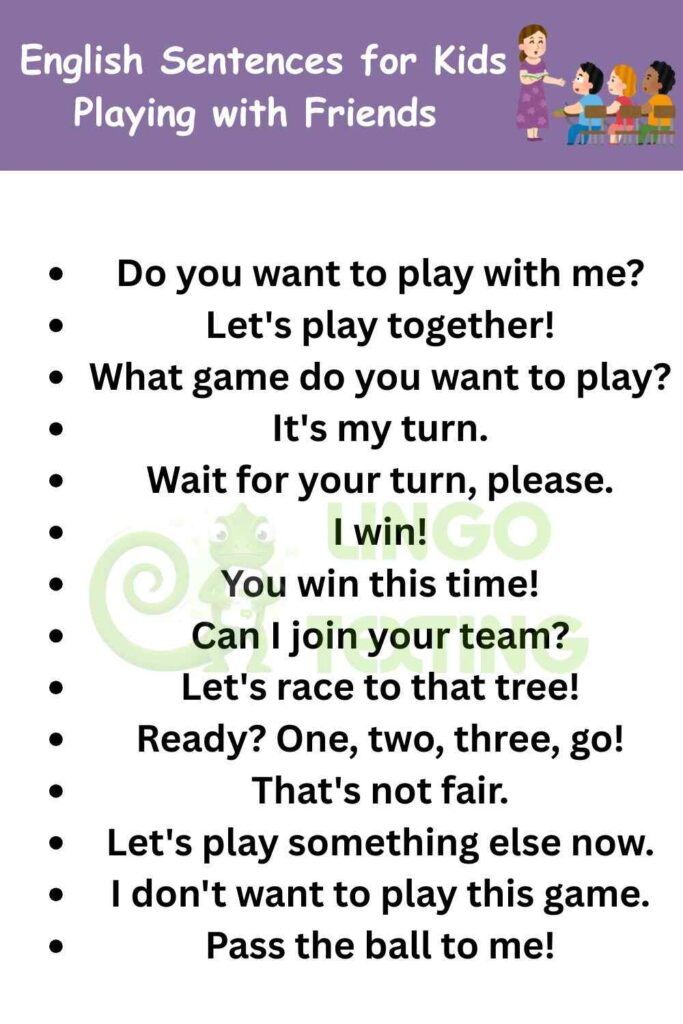
- Do you want to play with me? (The most important playground sentence)
- Let’s play together! (Inviting someone to join you)
- What game do you want to play? (Giving a friend a choice)
- It’s my turn. (Claiming your place in a game)
- Wait for your turn, please. (Reminding a friend politely)
- I win! (Celebrating a win with energy)
- You win this time! (Being a good sport after losing)
- Can I join your team? (Asking to be included in a group game)
- Let’s race to that tree! (Starting a fun physical challenge)
- Ready? One, two, three, go! (Starting any game together)
- That’s not fair. (When rules aren’t being followed)
- Let’s play something else now. (Changing the game politely)
- I don’t want to play this game. (Expressing preference without being rude)
- Pass the ball to me! (During a ball game)
- Come on, you can do it! (Encouraging a friend during a game)
- Are you okay? (Checking on a friend who fell or got hurt)
- Let’s be friends. (Making a new friend on the playground)
- Can I use that swing after you? (Asking politely at the park)
- Watch what I can do! (When you want to show something cool)
- That was so much fun! (Expressing joy after playing together)
Read also: 150+ Things That Start With I — Words, Objects, and Ideas for Every Learner
Feelings and Emotions English Sentences for Kids
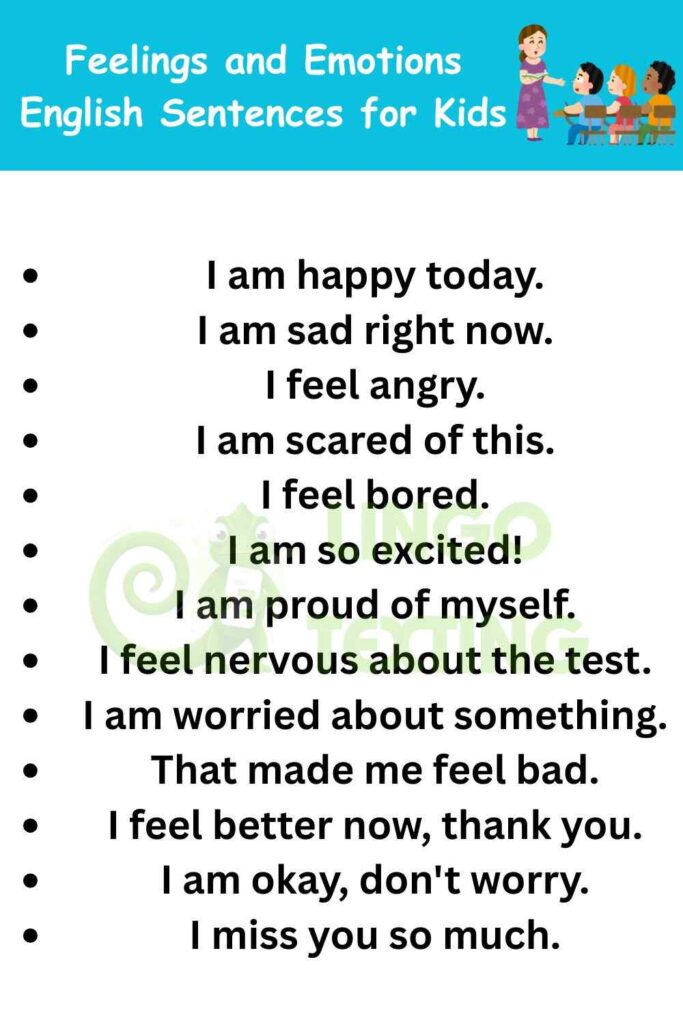
This is one of the most important sets of English sentences for kids. Feelings are real, and kids deserve words for them.
- I am happy today. (Sharing a good feeling with someone)
- I am sad right now. (When you feel low and need comfort)
- I feel angry. (Naming your emotion instead of acting out)
- I am scared of this. (When something frightens you)
- I feel bored. (When you have nothing to do)
- I am so excited! (When something great is coming)
- I am proud of myself. (After doing something well)
- I feel nervous about the test. (Before something big like an exam)
- I am worried about something. (When something bothers you deeply)
- That made me feel bad. (Telling someone how their action affected you)
- I feel better now, thank you. (After getting help or rest from someone)
- I am okay, don’t worry. (Reassuring someone you’re fine)
- I miss you so much. (Said to someone you love who isn’t around)
- That hurt my feelings. (Saying when something felt unkind)
- I feel loved when you do that. (A beautiful sentence to express warmth)
- I don’t feel like talking right now. (Setting a gentle boundary)
- That made me laugh so hard! (Sharing a joyful moment)
- I felt left out. (When you weren’t included and need to say so)
- I feel safe here. (Expressing comfort and security)
- I am grateful for you. (A warm and meaningful daily sentence)
Polite Words and Manners English Sentences for Kids
These small sentences carry big power. They work at home, at school, at a shop — everywhere a child goes.
- Please. (The magic word — use it always)
- Thank you. (Always say this after receiving help)
- You’re welcome. (Your response when someone says thank you)
- Excuse me. (When passing by someone or interrupting politely)
- I am sorry. (When you make a mistake or hurt someone)
- No, thank you. (Politely saying no to something offered)
- Yes, please. (Politely saying yes to something offered)
- Pardon me? (When you don’t hear something clearly)
- After you. (Being kind and letting others go first)
- You did a great job! (Genuinely complimenting a friend)
- That was very kind of you. (Acknowledging someone’s goodness)
- I appreciate your help. (A slightly deeper way of saying thank you)
- Sorry to bother you. (Before asking something of a busy person)
- Is it okay if I…? (A respectful way to ask for anything)
- Please forgive me. (When an apology needs more sincerity)
School Subjects and Study English Sentences for Kids
These daily use English sentences for Class 1 and above help kids talk about what they study. Different from classroom behavior sentences — these are about learning itself.
- My favorite subject is Math. (Sharing what you love in school)
- I like reading stories in English class. (Expressing a subject preference)
- This chapter is a little easy for me. (Sharing your view on a lesson)
- I need to study for my test tonight. (Planning for an upcoming exam)
- Can you check my answers, please? (Asking a teacher or parent for feedback)
- I got full marks! (Sharing a happy result with pride)
- I did not do well on the test. (Being honest about results — that’s brave)
- I need to practice more. (Showing the right attitude after a tough result)
- When is the homework due? (Asking about a deadline)
- I left my book at home today. (Explaining a situation to the teacher)
- I finished early — what should I do next? (Telling the teacher you’re done and ready)
- I want to read the next paragraph. (Volunteering in class)
- I don’t have a pen with me. (Explaining your situation to a classmate)
- Can I borrow your ruler? (Asking a classmate for a specific item)
- Science is my least favorite subject. (Being honest about what’s hard for you)
Shopping and the Outside World English Sentences for Kids
When kids go out with parents, these English sentences used in daily life come in very handy at markets, shops, and public places.
- How much does this cost? (Asking for a price at a shop)
- Can I have this one, please? (Choosing an item politely)
- I like this color better. (Expressing a shopping preference)
- This is too expensive. (When something costs more than expected)
- Can we go to the park today? (Asking to visit a place)
- I want an ice cream, please. (A classic kids’ request while outside)
- Where is the toy section? (Looking for something inside a big store)
- I need a new pencil — this one broke. (Explaining a school need while shopping)
- Thank you for buying this for me. (Expressing gratitude to a parent)
- Can we go home now? I am tired. (Asking to leave after a long outing)
- I need to use the restroom. (Important sentence when you’re outside the house)
- Where are we going next? (Asking about the plan while out)
- Can I carry the shopping bag? (Offering to help a parent)
- I will wait right here. (Telling someone exactly where you’ll be)
- That shop looks interesting — can we go inside? (Showing curiosity while out)
Mini Conversation English Sentences for Kids
Sentences become alive in conversations. Here are real-life mini dialogues using simple English sentences for kids.
Conversation 1: At School (Morning)
Ali: Good morning, Sara! Sara: Good morning, Ali! Are you ready for the test? Ali: I feel a little nervous. Are you? Sara: Yes, but I studied last night. We will do fine! Ali: You’re right. Let’s go inside.
Conversation 2: At Home (After School)
Mom: How was school today? Riya: It was good, Mom. I got full marks in English! Mom: That’s wonderful! Are you hungry? Riya: Yes, I am very hungry. Can I have some food, please? Mom: Of course. Wash your hands first. Riya: Okay, Mom. Thank you!
Conversation 3: On the Playground
Hamza: Do you want to play football? Omar: Yes! Can I join your team? Hamza: Sure! Are you ready? Omar: Wait — who kicks first? Hamza: We’ll do rock-paper-scissors! Omar: Okay! One, two, three — let’s go!
Conversation 4: At a Shop (With Parent)
Child: Mom, can I have this book? Mom: How much does it cost? Child: It says fifty rupees. Mom: Okay, let’s buy it. Child: Thank you so much, Mom! I really wanted this one.
Sentence Patterns Kids Can Reuse Again and Again
One of the smartest ways to learn English is through patterns. Learn one sentence pattern, and you can make many different sentences from it.
Pattern 1: I want…
- I want to read this book.
- I want to go to the park.
- I want a new pencil.
- I want to learn swimming.
- I want to finish this puzzle.
Pattern 2: I can…
- I can run very fast.
- I can write my name.
- I can do it by myself.
- I can finish this quickly.
- I can climb that wall.
Pattern 3: Can I…?
- Can I go outside, please?
- Can I ask you something?
- Can I try this game?
- Can I sit next to you?
- Can I have some more time?
Pattern 4: I don’t…
- I don’t understand this part.
- I don’t want to go yet.
- I don’t feel well today.
- I don’t know the answer.
- I don’t like loud noises.
Pattern 5: May I…?
- May I come in, please?
- May I go to the washroom?
- May I speak now?
- May I sit here?
- May I ask a question?
Common Mistakes Kids Make — And How to Fix Them
These mistakes happen a lot with beginners. Fixing them helps kids sound more natural.
| Wrong | Right |
| I is hungry. | I am hungry. |
| He go to school. | He goes to school. |
| She don’t like it. | She doesn’t like it. |
| I has a book. | I have a book. |
| Can I goes now? | Can I go now? |
| They is playing. | They are playing. |
| I want go home. | I want to go home. |
| Give me water now! | Can I have water, please? |
| I not understand. | I don’t understand. |
| We was late. | We were late. |
| He don’t knows. | He doesn’t know. |
| I sayed sorry. | I said sorry. |
A Simple Practice System That Really Works
Don’t just read sentences — use them. Here is a clear daily plan that works for beginners and helps make English feel natural over time.
Monday to Friday — 10 Minutes a Day
- Morning: Say 3 sentences out loud while getting ready. Example: “Good morning! I am ready. I need my bag.”
- Breakfast: Use one sentence to ask for something in English. Example: “Can I have some juice, please?”
- At School: Use the “May I” pattern at least once with your teacher.
- After School: Tell your mom or dad one thing about your day in English. Just one sentence is enough to start.
- Bedtime: Say “Good night” and one feeling sentence. Example: “I am happy today. Good night, Dad!”
Weekend Practice
- Pick 10 sentences from any section of this list and write them in a notebook.
- Say each one out loud three times slowly and clearly.
- Try to use 5 of them in real conversations during the day.
- Play the “English only” game for 15 minutes with a sibling or parent.
No pressure. No heavy studying. Just speaking a little bit every single day — that is what actually works.
Where Kids Can Use These Sentences in Real Life
These sentences fit perfectly into real daily moments:
At Home: Talking to parents, asking for food, saying good morning, sharing feelings, getting ready for school, and ending the day with good night.
At School: Asking the teacher questions, working with classmates, answering in class, asking for permission to do something.
With Friends: Inviting someone to play, taking turns in games, expressing feelings, celebrating wins, and making new friends.
At Shops or Markets: Asking for prices, choosing items, saying thank you to a parent, and asking where something is.
In Public Places: Asking for the restroom, telling a parent where you’ll wait, and reading signs or asking simple questions.
Every single moment of a kid’s day can have an English sentence in it. That is how speaking becomes natural — not by studying, but by actually using the language.
Read also: 200+ Easy Classroom English Sentences for Everyday Use
FAQs — Questions Parents and Kids Often Ask
1. How can I help my child actually use these sentences daily?
Start small. Pick 2–3 sentences and use them in real moments—like meals or school prep. Repetition in real life matters more than memorizing long lists.
2. What if my child mixes English with their native language?
That’s normal. It shows they’re trying. Let them speak freely first, then gently repeat the sentence correctly. Confidence grows before perfection.
3. Should I correct every mistake my child makes?
No. Too much correction can make kids afraid to speak. Focus on understanding first. Correct only when it helps, not when it stops them from trying.
4. How long should daily practice take?
Even 10 minutes is enough. A few spoken sentences every day build stronger habits than long study sessions once a week.
5. Can these sentences help shy children?
Yes. Simple sentences give shy kids a starting point. When they know what to say, they feel safer speaking—and that’s where confidence begins.
Closing Thoughts
Learning English doesn’t happen from a textbook. It happens from real moments — morning conversations, classroom questions, playground chats, and bedtime goodnights.
These 200+ simple English sentences for kids are a speaking toolkit. Every sentence here was chosen because a real child will actually need it in a real moment of their day.
Pick one section. Start today. The more your child uses these sentences, the faster English starts to feel like their own voice — not a foreign language they are afraid of.
And that moment — when speaking feels natural — is worth every small step it takes to get there.

I write clear, practical English lessons for everyday use. On Lingotexting, I break down grammar, vocabulary, and word types into simple ideas you can apply quickly. My focus is accuracy, real examples, and helpful visuals, so learners build confidence, improve writing, and communicate naturally in school, work, and daily life.